
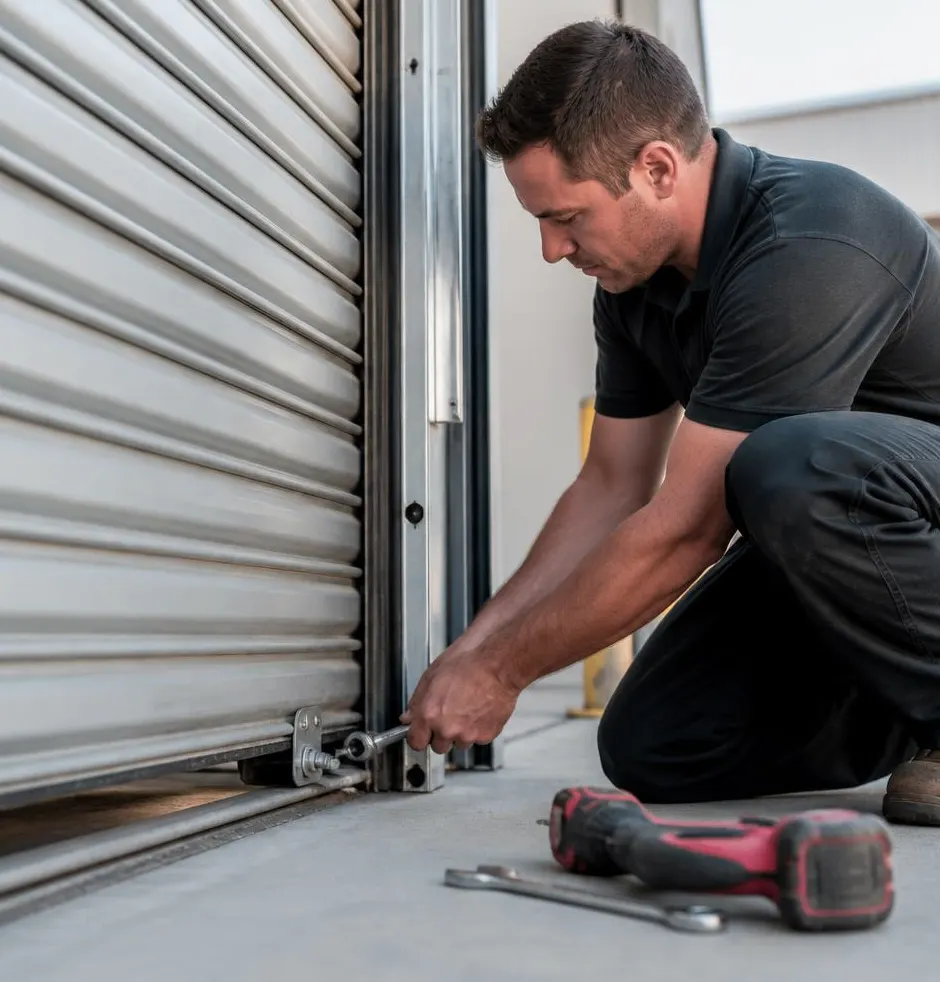
What a Technician Actually Sees on These Calls
Most calls about this start the same way: someone notices rust streaks bleeding down from the hinges or bottom corners, or they press a thumb into the bottom panel and feel it give slightly where it used to be solid. On a lot of doors around here, the bottom two feet of the panels are swollen just enough that the door doesn't sit flush in the frame anymore, and the weather seal underneath is cracked or pulled loose. Springs and the track hardware often have a dull orange film on them, even if the door still opens and closes fine. None of that means the door is about to fail — but it's not nothing either, and that's usually the exact disagreement happening at home.
Why This Happens So Much in This Climate
Garage doors here deal with a rougher combination than most: constant humidity, afternoon downpours that blow in sideways under the eaves, and long stretches of heat that keep moisture sitting on metal and wood instead of drying off. Add salt air if you're anywhere near the coast, and you get two separate problems happening at once:
- Rust forms where bare metal stays damp — hinges, roller stems, spring coils, the bottom bracket, and any spot where paint has chipped and exposed steel.
- Swelling happens mostly on wood or wood-composite panels, and sometimes on insulated steel doors where moisture gets into the foam core through a cracked seam or damaged weatherstrip. The material absorbs water, expands, and doesn't always shrink back to its original shape once it dries.
Hurricane season makes this worse in a specific way: wind-rated doors are built to flex and resist pressure, which is good for safety, but that same flexing can work water into seams faster during heavy, wind-driven rain. A door that's taken a few tropical storms without maintenance is a prime candidate for both rust and swelling at once.
Is It Cosmetic, or Is It Structural?
This is usually the actual argument, so here's how to tell the difference without guessing:
- Likely cosmetic: surface rust on bolts, hinges, or track brackets that hasn't eaten into the metal (it wipes or scrapes off, no pitting underneath). Light swelling that doesn't change how the door seals or operates.
- Worth addressing soon: rust that's pitted or flaking in layers, rust on spring coils (springs are under heavy tension and rust weakens them unevenly, which is a safety issue), a door that now sticks, rubs, or doesn't close flush, or swelling severe enough that the bottom seal no longer touches the floor evenly.
- Needs a real look now: rust at the bottom bracket or cable attachment points, visible gaps where the panel has warped away from the frame, or a door that's noticeably heavier or harder to lift by hand than it used to be — that's often moisture-related weight gain or a spring losing strength.
If you're standing in the garage arguing about it, the bottom bracket, the springs, and the bottom seal are the three places to actually check before anyone wins the debate.
What Actually Helps (and What's a Waste of Time)
A fresh coat of paint over active rust buys very little time — it looks fine for a few months and then bubbles right back up because moisture is still trapped underneath. What actually works:
- Clean and dry first. Wire-brush loose rust off hardware before anything else touches it.
- Use a rust-inhibiting primer on bare metal, not just top-coat paint, if you're doing it yourself.
- Check and replace the bottom weather seal every couple of years — it's cheap and it's the single biggest factor in how much water reaches the bottom panel and bracket.
- Keep the track and hinges lubricated with a garage-door-specific lubricant, not WD-40, which doesn't hold up well in heat and humidity.
- Make sure gutters and downspouts aren't dumping runoff directly onto the door — a surprising amount of localized swelling comes from water hitting the same spot every storm.
None of this reverses swelling that's already happened. Once a panel has absorbed water and expanded, it typically stays that way, which is why panel replacement is usually the real fix rather than drying it out and hoping.
When to Call Caryville Overhead Door Co
If the rust has reached the springs or the bottom bracket, or if a panel is swollen enough that the door doesn't seal or move the way it used to, that's the point to stop debating and get someone out to look at it. We handle this exact combination constantly across Caryville, Bonifay, Chipley, Westville, Ponce de Leon, Defuniak Springs, Graceville, and Vernon. A Garage Door Tune-Up & Maintenance visit will catch rust and seal problems before they spread, and if a panel is too far gone, we can walk you through a straightforward Garage Door Panel Replacement instead of a full door swap. If springs show pitting or uneven rust, we'll check them for safety as part of the same visit.
If you're in Caryville, FL or anywhere in Washington County and want an honest answer on whether it's cosmetic or not, give Caryville Overhead Door Co a call — we'll come look at it and tell you straight.